
In 2026, artificial intelligence is no longer a futuristic concept—it’s the engine powering America’s most critical technological shifts. From AI agents that run entire workflows to federal regulations redefining responsible innovation, the U.S. tech landscape is being remade by six dominant AI trends.
If you’re a developer, business leader, policymaker, or tech-savvy professional, understanding these trends isn’t optional. They’re already influencing hiring, investment, product design, and competitive strategy across Silicon Valley, Austin, Boston, and beyond. This article cuts through the hype to deliver actionable insights on the AI forces defining American technology this year.

1. The Rise of Autonomous AI Agents
Gone are the days when AI merely answered questions. In 2026, autonomous AI agents—systems that perceive, plan, act, and learn independently—are transforming how work gets done.
Unlike chatbots, agents can execute multi-step tasks without human intervention. For example, a sales agent can identify a lead on LinkedIn, research their company, draft a personalized email, schedule a demo via Calendly, and update the CRM—all in under 90 seconds.
Real-World Impact
- Enterprise adoption: Companies like JPMorgan Chase and UnitedHealth are piloting agent swarms to handle claims processing and compliance checks.
- Developer tools: Frameworks like LangGraph and Microsoft AutoGen now let engineers build custom agent teams with memory, delegation, and error correction.
Pros:
✓ 24/7 operation
✓ Scalable task execution
✓ Reduced operational overhead
Cons:
✗ Hallucination risks in unstructured environments
✗ Limited auditability in complex workflows
Actionable tip: Start with “bounded autonomy.” Deploy agents only in well-defined, low-risk processes (e.g., IT ticket triage, invoice processing) before scaling.
2. On-Device AI: Privacy, Speed, and the End of the Cloud-Only Era
Americans are demanding faster, more private AI—and tech giants are responding. In 2026, on-device AI is surging, powered by next-gen NPUs (Neural Processing Units) in iPhones, Android flagships, and Windows PCs.
Apple’s iOS 19 and Qualcomm’s Snapdragon X Elite chips now run large language models (LLMs) like Llama 3 and Phi-4 directly on devices. Microsoft’s Copilot+ PCs leverage this to enable real-time translation, advanced photo editing, and contextual recall—all without sending data to the cloud.
Why This Matters for US Users
- Privacy: Sensitive data (medical notes, financial logs) stays on your device.
- Latency: Responses are near-instant—critical for voice assistants and AR applications.
- Offline use: AI features work even without Wi-Fi or cellular signal.
Best use cases:
- Personal health coaching apps
- Real-time language interpretation for customer service
- Localized content moderation in education tools
Pricing note: On-device AI is increasingly bundled into hardware. No extra subscription—just buy a Copilot+ PC or iPhone 17.
3. AI Regulation Goes Mainstream
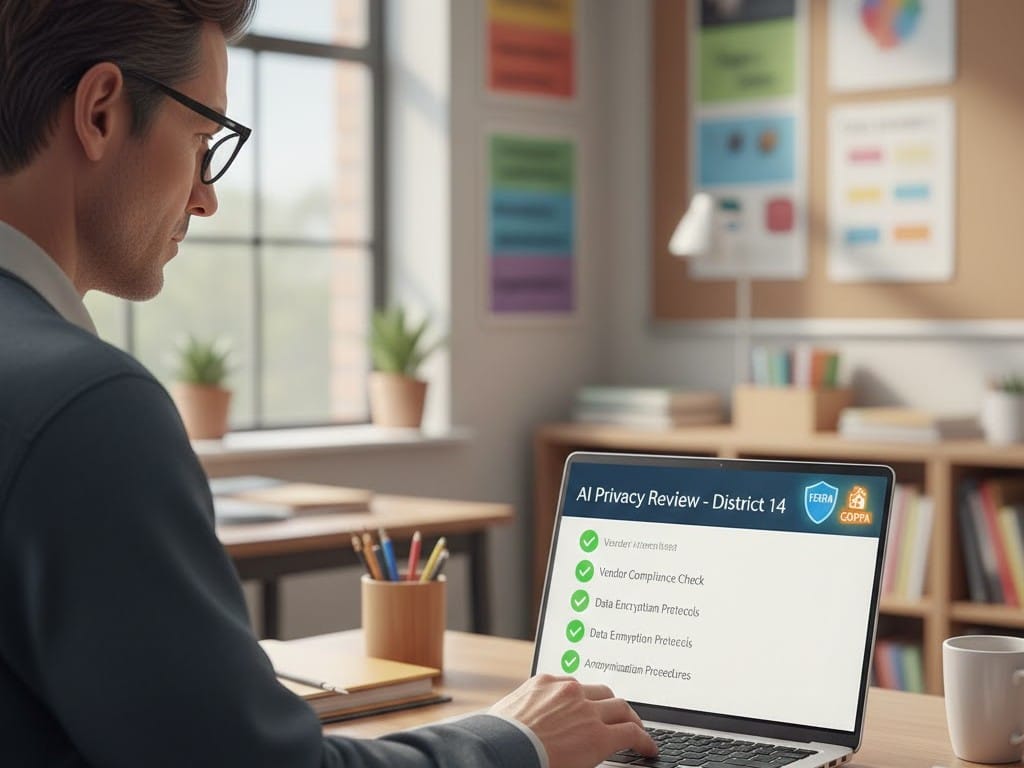
2026 marks the year AI regulation shifts from theory to enforcement in the U.S. With the AI Foundation Model Transparency Act signed in late 2025 and the NIST AI Risk Management Framework now mandatory for federal contractors, compliance is no longer optional.
Key Regulatory Shifts
- Mandatory model cards: Developers must disclose training data sources, known biases, and performance metrics.
- High-risk AI audits: Systems used in hiring, lending, or healthcare face third-party evaluation.
- Copyright scrutiny: The U.S. Copyright Office now rejects AI-generated content lacking “substantial human authorship.”
What this means for businesses:
If your product uses generative AI—especially for customer-facing decisions—you need an AI governance plan. Tools like Arthur AI and Fiddler help monitor model behavior and generate compliance reports.
Expert advice: Appoint an AI ethics officer (even part-time). Document every model decision. Assume regulators will ask for your data lineage.
4. The Small Language Model (SLM) Revolution
While 2024–2025 was the era of trillion-parameter giants, 2026 belongs to small language models (SLMs)—lean, efficient, and highly specialized.
Models like Microsoft’s Phi-4 (2.7B parameters), Google’s Gemma 2, and Mistral’s SmolLM deliver 90% of the performance of larger models at a fraction of the cost and latency.
Why Companies Are Switching
| Metric | Large Model (e.g., GPT-4) | Small Model (e.g., Phi-4) |
|---|---|---|
| Inference Cost | $0.06 / 1K tokens | $0.002 / 1K tokens |
| Latency | 800–1200 ms | 80–150 ms |
| Hosting | Cloud-only | On-device or edge |
| Customization | Limited | Fine-tune with <100 examples |
SLMs power everything from smart thermostats to bank chatbots—proving that “good enough + fast + cheap” often beats “brilliant but slow.”
Action step: Audit your AI use cases. If you don’t need creative writing or deep reasoning, an SLM will save you 70%+ in operational costs.
5. AI-First Product Design
U.S. tech companies are no longer adding AI as a feature—they’re rebuilding products from the ground up with AI as the core.
Take Notion AI: it doesn’t just summarize notes—it anticipates your next project, links related documents, and auto-generates meeting agendas based on your team’s rhythm. Similarly, Adobe’s Creative Cloud now treats AI as a co-pilot in every tool, not a sidebar gimmick.
Hallmarks of AI-First Design
- Context awareness: The app knows your role, past actions, and current goals.
- Proactive assistance: Instead of waiting for prompts, it suggests next steps.
- Seamless human-AI handoff: You can edit, override, or explain any AI output effortlessly.
For founders and product managers: Ask, “What would this product look like if it were invented after LLMs existed?” If your answer is “just a chat window,” you’re behind.
6. The Infrastructure Arms Race: Chips, Cloud, and Sovereign AI
Behind every AI trend is a furious battle for infrastructure—and the U.S. is all in.
Chip Dominance
NVIDIA’s Blackwell Ultra GPUs and AMD’s MI325X are enabling trillion-token training runs. But the real story is custom silicon:
- Google’s TPU v6
- Amazon’s Trainium 2
- Microsoft’s rumored Maia 2
These chips cut training costs by up to 40%—a game-changer for startups.
Sovereign AI Clouds
Faced with data residency laws and national security concerns, U.S. firms are building sovereign AI clouds—dedicated, air-gapped environments for sensitive workloads. Microsoft Azure and Google Cloud now offer “U.S. Data Boundary” options for defense and healthcare clients.
Practical implication: If you handle government or health data, confirm your cloud provider offers FedRAMP High or HIPAA-compliant AI pipelines.
AI Adoption by Sector: What’s Hot in 2026
| Industry | Top AI Trend | Real-World Example |
|---|---|---|
| Healthcare | Diagnostic co-pilots | Tempus uses AI to match cancer patients with clinical trials in seconds |
| Finance | Real-time fraud agents | Capital One’s AI detects anomalous transactions with 99.2% accuracy |
| Education | Personalized tutors | Khanmigo adapts lesson difficulty based on student emotion and pace |
| Manufacturing | Predictive maintenance | Siemens uses edge AI to foresee equipment failure 14 days in advance |
| Retail | Hyperlocal inventory AI | Walmart’s system predicts store-level demand down to the ZIP code |
Key insight: AI isn’t one-size-fits-all. Success comes from matching the right trend to your industry’s pain points.

Pitfalls to Avoid in 2026
Even as AI advances, missteps are common. Here’s how to stay safe:
- Ignoring model drift: AI performance degrades over time. Retrain monthly.
- Over-engineering: Start with rule-based automation before jumping to LLMs.
- Neglecting human feedback loops: Users must easily correct AI errors—this data improves your model.
- Underestimating costs: Generative AI can spike cloud bills. Monitor token usage rigorously.
How to Prepare Your Team for 2026’s AI Shifts
You don’t need a PhD to stay relevant. Focus on these skills:
- AI literacy: Understand prompts, model limitations, and evaluation metrics.
- Prompt engineering: Learn to craft precise, context-rich instructions.
- AI-augmented workflows: Master tools like GitHub Copilot, Notion AI, and Adobe Firefly.
- Ethical reasoning: Know when not to use AI (e.g., sensitive HR decisions).
Free resources:
- Google’s “AI Essentials” course (free on Coursera)
- Microsoft Learn’s “Responsible AI” path
- Stanford’s “CS555: AI in the Real World” (public lectures online)
The Bottom Line: AI Is Infrastructure Now
In 2026, artificial intelligence in the U.S. has matured from novelty to necessity. The trends above—autonomous agents, on-device processing, regulation, small models, AI-native design, and sovereign infrastructure—are not speculative. They’re being deployed, funded, and regulated right now.
The companies and professionals thriving this year share one trait: they treat AI like electricity—ubiquitous, reliable, and woven into everything they do.
Actionable Next Steps
- Audit your workflows: Identify one repetitive task to automate with an AI agent.
- Evaluate your hardware: If you’re buying a new laptop or phone, prioritize NPU performance.
- Review compliance needs: If you use AI for decisions affecting people, document your model’s logic.
- Experiment with an SLM: Try Phi-4 via Azure or Hugging Face—see how it compares to GPT-4 for your use case.
- Join the conversation: Attend local AI meetups (check Meetup.com or Eventbrite) or virtual sessions from ML Collective.
The future isn’t coming—it’s already here. The question is: are you building it, or being shaped by it?
FAQ: Top AI Questions U.S. Professionals Are Asking in 2026
Q1: Are small language models really as good as big ones?
A: For specific, narrow tasks (classification, summarization, customer support), yes—and they’re far cheaper and faster.
Q2: Do I need to worry about AI regulation if I’m a small business?
A: If your AI impacts hiring, credit, housing, or health, yes. Even small firms using third-party AI tools (like resume screeners) may be liable.
Q3: Can I run advanced AI on my current laptop?
A: If you have a 2024+ Copilot+ PC or MacBook with Apple Silicon, yes—many models now run locally via Llama.cpp or Ollama.
Q4: What’s the biggest AI security risk in 2026?
A: Prompt injection attacks—where bad actors trick your AI into leaking data or executing harmful actions. Always sandbox AI inputs.
Q5: Will AI replace software developers?
A: No—but developers using AI are replacing those who don’t. AI handles boilerplate; humans focus on architecture, ethics, and user experience.