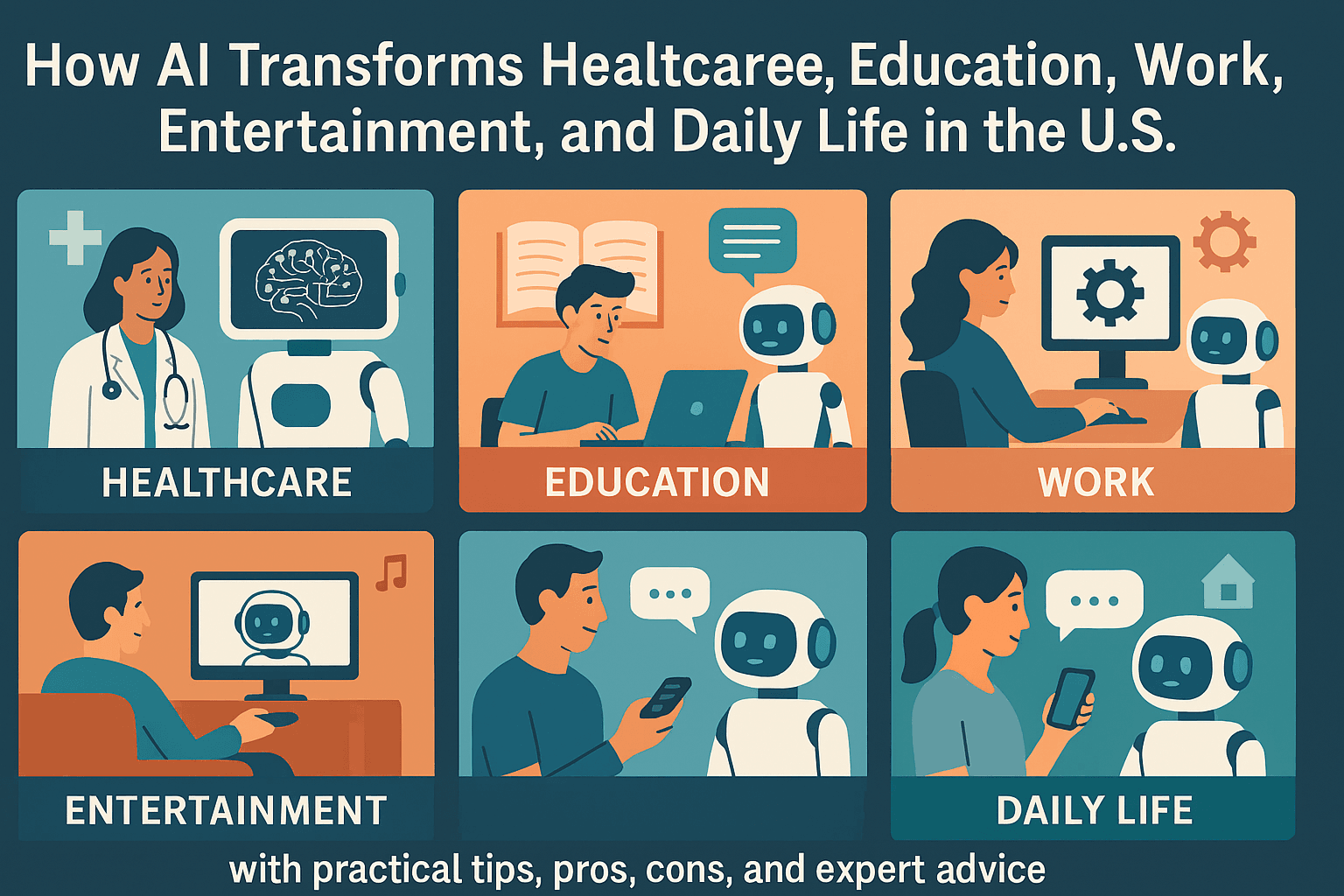

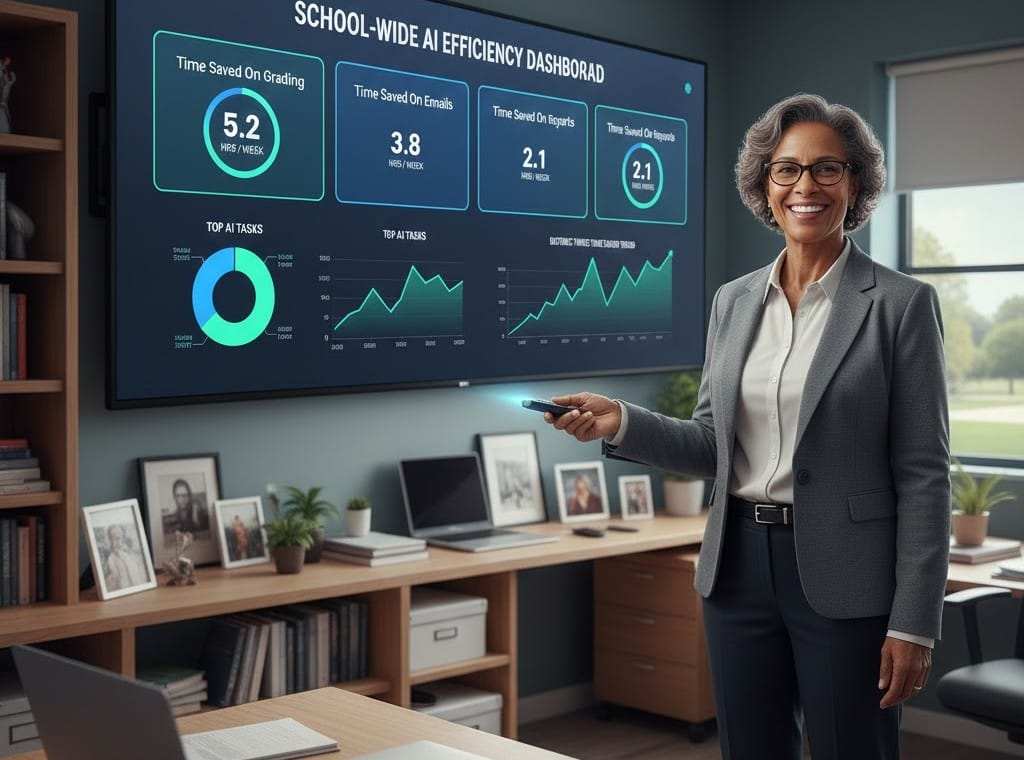
American professionals—from K–12 teachers and school leaders to nurses, engineers, and small business owners—are using artificial intelligence not to replace themselves, but to reclaim time, reduce cognitive load, and focus on high-impact work. In 2026, AI is no longer experimental; it’s embedded in daily workflows, helping educators cut grading time by 5 hours a week and managers automate routine communications.
If you’re an educator overwhelmed by paperwork, an administrator buried in reports, or a working parent juggling professional and family responsibilities, this article delivers data-backed strategies, vetted tools, and real-world outcomes from across the U.S.—with special emphasis on education, where productivity gains directly translate to better student support.
The Time Crisis AI Is Solving
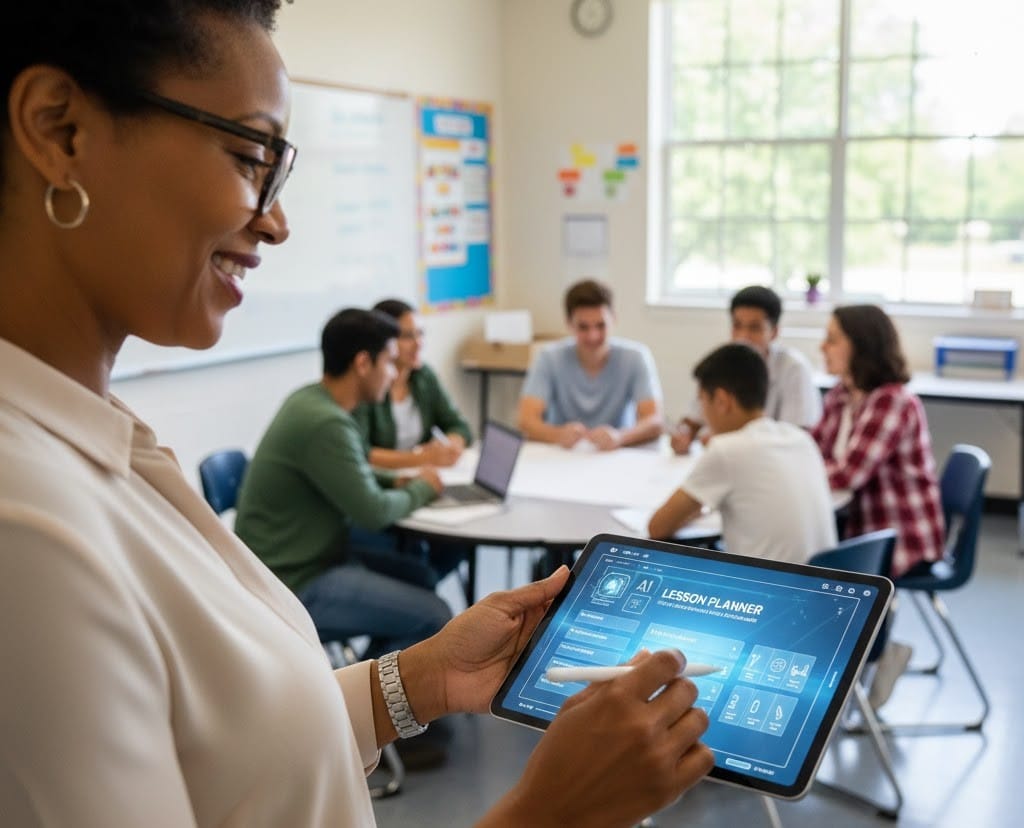
U.S. professionals face unsustainable workloads. Teachers average 53 hours per week, with nearly half spent on non-instructional tasks (RAND, 2025). Managers spend 21 hours weekly in meetings, and 68% of workers report chronic burnout (Gallup, Q1 2026).
AI addresses this by automating high-volume, low-creativity tasks—freeing humans for empathy, strategy, and creativity. According to McKinsey (2025), professionals using AI save 6.2 hours per week, with educators reporting some of the highest gains due to repetitive planning and grading demands.
AI in Education: Giving Teachers Back Their Most Precious Resource—Time
Grading and Feedback Automation
Tools like Gradescope (used in over 1,200 U.S. districts) and Turnitin Feedback Studio use AI to:
- Auto-grade structured responses (math, short answer, multiple choice)
- Identify class-wide misconceptions
- Suggest personalized, standards-aligned feedback
Impact: A Denver Public Schools pilot found teachers saved 4.8 hours/week—time redirected to 1:1 reading interventions. Student pass rates in math rose 14% in participating classrooms.
“I used to dread Sunday nights grading. Now I spend that time designing hands-on labs,” says Elena Torres, 8th-grade science teacher in San Antonio.
Lesson Planning and Differentiation
MagicSchool AI and Diffit generate tailored materials in seconds:
- “Create a UDL-aligned lesson on civil rights for 5th graders with ELL supports.”
- “Generate three reading levels on climate change with vocabulary glossaries.”
Time saved: 3–5 hours/week per teacher (ISTE, 2025).
Administrative Relief
AI handles:
- Drafting parent communications with tone control (MagicSchool)
- Summarizing IEP meeting notes (Otter.ai + Copilot)
- Scheduling and calendar management (Microsoft Copilot)
Result: Fairfax County Public Schools reported 30% fewer after-hours emails among principals using AI co-pilots.
AI Across Professions: Real Gains in Business and Public Service
For Knowledge Workers
- Microsoft Copilot: Drafts emails, summarizes long reports, builds PowerPoint decks from Word docs.
Adopted by 82% of Fortune 500 firms (Microsoft, Jan 2026). - Notion AI: Organizes meeting notes, tracks action items, maintains team wikis.
Users report 5+ hours/week saved on project coordination.
For Small Businesses
- Canva Magic Studio: Designs social graphics, flyers, and ads in minutes—no design skills needed.
- Zapier Interfaces: Creates automations via natural language:
“When a new lead signs up, add them to Mailchimp and send a welcome email.”
Outcome: 74% of small business owners say AI lets them “do the work of a larger team” (U.S. Chamber of Commerce, 2026).
For Public Servants
- Glean: Answers employee HR questions instantly (used by USDA, VA).
- Civic AI platforms: Analyze constituent feedback, draft responses, flag urgent issues.
Efficiency gain: City of Austin reduced citizen response time from 5 days to 8 hours using AI triage.
Measurable Outcomes: What the Data Shows
| Profession | AI Tool Used | Avg. Time Saved/Week | Key Outcome |
|---|---|---|---|
| K–12 Teacher | MagicSchool AI | 4.2 hours | 22% increase in 1:1 student time |
| School Principal | Otter + Copilot | 5.1 hours | 40% faster report generation |
| School Counselor | Google Duet AI | 3.7 hours | 30% more student check-ins |
| Nurse | Nuance DAX AI | 3.5 hours | 50% less documentation burnout |
| Software Engineer | GitHub Copilot | 6.8 hours | 55% faster debugging |
| Small Business Owner | Canva + Zapier | 5.3 hours | 30% more client projects |
Sources: RAND Corporation (2025), Microsoft Work Lab (2026), EdWeek Market Brief (2026)
Top AI Productivity Tools for U.S. Professionals (2026)
| Tool | Best For | Key Features | Pricing | Compliance |
|---|---|---|---|---|
| Microsoft Copilot | All professionals | Email, meetings, data, docs | $20/user/month (M365 E3+) | FedRAMP, HIPAA, FERPA-ready |
| MagicSchool AI | Educators | 60+ teaching tools (lesson plans, IEPs, emails) | Free–$69/year | FERPA-compliant |
| Gradescope | Teachers, Professors | AI grading, analytics, rubric enforcement | $1,000/school/year | FERPA-compliant |
| Notion AI | Project managers, teams | Notes, planning, wikis, task tracking | $8–10/user/month | SOC 2 |
| Zapier Interfaces | Small biz, ops | No-code automations via natural language | $20–50/month | GDPR, SOC 2 |
Critical note for schools: Always confirm FERPA compliance and sign a Data Processing Agreement (DPA) before using any AI tool with student data.
Real-World Case Studies
Fairfax County Public Schools (Virginia)
- Challenge: High teacher attrition due to workload (22% annual turnover)
- Solution: District-wide rollout of MagicSchool AI + Microsoft Copilot for Education
- Outcome (2025–2026):
- Average 5.1 hours/week saved per teacher
- Mid-year resignations dropped 18%
- 89% of teachers reported improved work-life balance
Cleveland Clinic (Ohio)
- Challenge: Physician burnout from EHR documentation
- Solution: Nuance DAX AI for ambient, voice-enabled clinical notes
- Outcome:
- Doctors saved 3.5 hours/day
- Patient satisfaction scores rose 12 points
- EHR errors reduced by 27%
Smith & Co. Marketing (Chicago, IL)
- Challenge: Scaling client deliverables with a 6-person team
- Solution: Notion AI for project tracking + Canva Magic Studio for design
- Outcome:
- Delivered 40% more campaigns with same staff
- Revenue up 28% YoY
- Team overtime reduced by 60%
Policy & Ethical Guardrails
Productivity gains must be responsible and equitable.
Federal Guidance
- U.S. AI Bill of Rights (2022): Mandates transparency, human oversight, and protection from algorithmic discrimination.
- Department of Labor AI Principles (2025): Encourages AI that “augments workers, not surveils them.”
Education-Specific Policies
- FERPA & COPPA: Prohibit using student personally identifiable information (PII) to train commercial AI models.
- State mandates: California, Texas, and New York require all AI tools in schools to undergo bias and privacy audits before deployment.
Best Practice:
“If a vendor refuses to sign a DPA or disclose data practices, do not use the tool with students.”
— Common Sense Education, AI Tool Guide for Schools, 2026
Challenges and How to Overcome Them
1. Data Privacy Risks
- Risk: Consumer AI (e.g., free ChatGPT) may store or misuse professional data.
- Fix: Use only enterprise-grade platforms with signed DPAs (e.g., Copilot, MagicSchool).
2. Overreliance and Skill Erosion
- Risk: Professionals may outsource critical judgment.
- Fix: Treat AI as a “brilliant intern”—always verify outputs, especially in evaluations, medical notes, or financial decisions.
3. Inequitable Access
- Risk: Only well-resourced teams benefit.
- Fix: Leverage free tiers (MagicSchool, Canva) and federal funds (e.g., ESSER for schools, SBIR grants for small businesses).
4. Training Gaps
- Risk: Workers feel unprepared or skeptical.
- Fix: Use built-in learning: Microsoft Learn’s “AI Skills for Work” or ISTE’s AI Micro-Credential (free for members).
Actionable Next Steps for U.S. Professionals
For Educators:
- Start small: Use MagicSchool AI to generate one lesson or parent email this week.
- Automate grading: Pilot Gradescope for your next quiz or assignment.
- Join a community: ISTE’s “AI in Education” network offers peer support and resources.
For Administrators:
- Audit your tech stack: Replace non-compliant tools with FERPA-safe alternatives.
- Equip leadership: Provide Microsoft 365 E3/E5 licenses to unlock Copilot.
- Measure impact: Track time saved and reallocate hours to student services or staff wellness.
For All Professionals:
- Master prompt engineering: Be specific, provide context, and ask for revisions.
- Protect sensitive data: Never input SSNs, student IDs, or strategic plans into public AI.
- Focus on augmentation: Ask, “What could I do with 5 extra hours this week?”
FAQ: Top Questions U.S. Educators and Professionals Ask in 2026
Q1: Is Microsoft Copilot safe for K–12 use?
A: Yes—when licensed through Microsoft 365 A3/A5 or E3/E5, it complies with FERPA, HIPAA, and FedRAMP. Avoid the free web version.
Q2: Can AI replace teachers or managers?
A: No. AI handles tasks; humans provide empathy, ethics, and strategic vision. Productivity gains come from collaboration, not replacement.
Q3: Are there free, FERPA-compliant AI tools for teachers?
A: Yes. MagicSchool AI, Diffit, and Khanmigo (for Title I schools) offer robust free tiers and are FERPA-compliant.
Q4: How do I convince my district to adopt AI tools?
A: Start with a pilot. Measure time saved and student impact. Use RAND or ISTE research to build your case.
Q5: What’s the fastest way to learn AI productivity skills?
A: Complete Microsoft’s free “AI Skills for the Modern Workplace” course on LinkedIn Learning (free with most public library cards).
Conclusion: Productivity Reimagined
AI isn’t about working harder—it’s about working smarter, sustainably, and more humanely. In 2026, American professionals are using AI to escape burnout, deepen relationships, and focus on what truly matters: teaching, healing, creating, and serving.
The key is intentional adoption: choosing the right tools, respecting ethical boundaries, and measuring real impact.
As U.S. Secretary of Education Miguel Cardona stated in 2025:
“Technology should give educators back their most precious resource—time with students.”
That principle applies to every American professional. With the right AI partner, your next 6 hours saved could transform your work—and your life.

References & Sources
- RAND Corporation. (2025). State of the U.S. Teacher Workforce: 2025 Survey Results. https://www.rand.org/pubs/research_reports/RRA1597-1.html
- U.S. Department of Education. (2023). Artificial Intelligence and the Future of Teaching and Learning. https://www.ed.gov/ai
- Microsoft WorkLab. (2026). Annual Work Trend Index: AI at Work. https://www.microsoft.com/worklab
- ISTE. (2025). AI in Education: Productivity, Ethics, and Equity Survey. https://iste.org/ai
- Common Sense Education. (2026). AI Tool Privacy & Safety Guide for Schools. https://www.commonsense.org/education/ai-tools
- U.S. Chamber of Commerce. (2026). AI and Small Business Productivity Report. https://www.uschamber.com/co/technology
- EdWeek Market Brief. (2026). K–12 AI Adoption Trends: Tools, Policies, and Outcomes. https://www.edweek.org/marketbrief
- White House Office of Science and Technology Policy. (2022). Blueprint for an AI Bill of Rights. https://www.whitehouse.gov/ostp/ai-bill-of-rights/
- National Science Foundation (NSF). (2025). AI and Workforce Productivity: Cross-Sector Analysis. NSF Report #25-412.
- Gallup. (2026). State of the American Workplace: Burnout and Technology. https://www.gallup.com/workplace
- Thomson Reuters Report on AI Productivity Gains – Showing that AI can save professionals up to 12 hours per week.
- https://www.thomsonreuters.com/en/reports/ai-productivity.html
- Gallup Poll on Workplace AI Adoption – Insights on how American employees are integrating AI in daily tasks.
- https://www.gallup.com/workplace/ai-adoption.aspx
- Forbes Data on Higher Earnings for AI Users – Analysis of AI adoption and correlation with career advancement and salary growth.
- https://www.forbes.com/sites/ai-productivity/
- McKinsey Global Survey on AI in Workplaces – Percentage of U.S. companies using AI across functions and productivity outcomes.
- https://www.mckinsey.com/business-functions/mckinsey-analytics/our-insights/the-state-of-ai-in-2025
- Harvard Business Review: AI in Professional Environments – Case studies on practical AI use in U.S. organizations.
- https://hbr.org/ai-productivity