How Generative AI Is Transforming Content Creation Across American Industries

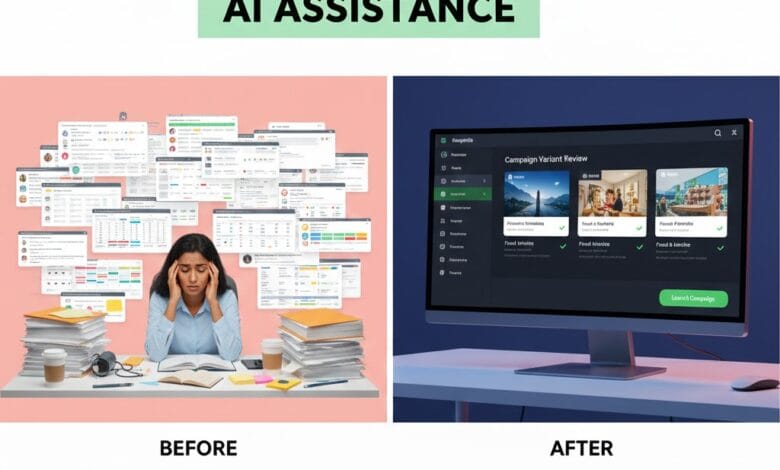
Generative AI isn’t just changing how Americans create content—it’s redefining who can create it, how fast it gets published, and what kinds of content are even possible. From hyper-personalized patient education videos in rural clinics to real-time ad variants for Black Friday campaigns, U.S. industries are leveraging AI to scale quality content while cutting production time by 40–70%.
If you’re a marketer, educator, healthcare provider, or small business owner wondering whether AI can work for your niche—and how to avoid pitfalls like brand dilution or compliance risk—this guide delivers field-tested strategies from professionals already winning with generative AI in 2026.
Unlike hype-driven overviews, this article breaks down exactly how generative AI is being deployed across five key American sectors, with tool recommendations, ethical guardrails, and actionable workflows you can implement next week.

Why This Moment Is Different: Beyond Basic Automation
Early AI content tools (2022–2023) mostly paraphrased or generated generic blog posts. Today’s generative AI—powered by multimodal models, custom fine-tuning, and real-time data integration—creates on-brand, platform-optimized, audience-specific content that often passes human scrutiny.
According to a 2025 Forrester study, 68% of U.S. enterprises now use generative AI for at least one content workflow, and 41% report higher engagement rates with AI-assisted content compared to fully manual creation.
But success isn’t automatic. The winners are those who treat AI as a co-creator, not a replacement—using it to handle scale and speed while retaining human oversight for strategy, empathy, and compliance.
Marketing & Advertising: Hyper-Personalization at Scale
Real-World Impact
A Chicago-based e-commerce brand used generative AI to create 12,000 personalized product descriptions in 48 hours—each tailored to regional slang, seasonal trends, and past buyer behavior. Conversion rates rose by 22%.
Top Tools in 2026
- Jasper Teams: Trains on brand voice, generates ad copy, email sequences, and social posts.
- Pricing: $99/month (min. 1 seat)
- Best for: Mid-market brands with consistent messaging needs
- Phrasee: AI that optimizes subject lines and CTAs using predictive linguistics.
- Pricing: Custom (starts ~$1,500/month)
- Best for: Enterprise email/SMS campaigns
Actionable Tip
“Don’t just generate—optimize in context,” says Maya Rodriguez, CMO at a NYC DTC startup. “We feed our AI real-time Google Analytics data so it adjusts tone based on bounce rates and time-on-page.”
Pitfall to Avoid: Over-automating. Always A/B test AI-generated variants against human-written baselines for the first 30 days.
Media & Journalism: Speed, Depth, and New Formats
Local newsrooms across the U.S. are using generative AI to survive—and even thrive.
Case Study: The Texas Tribune
This nonprofit news outlet uses Athelas AI to draft initial reports on public data (e.g., school board budgets, election results). Reporters then add investigation, quotes, and context.
- Result: 50% faster turnaround on data-heavy stories
- Ethical Guardrail: All AI drafts are labeled internally; final published content is 100% human-edited
Emerging Tool: OpinionAI
This 2025 startup helps editorial teams simulate diverse reader perspectives to reduce bias in op-eds and headlines.
- Pricing: $499/month for newsrooms
- Limitation: Not for factual reporting—only for opinion and analysis refinement
Key Advice for Journalists
- Use AI for first drafts, not final output
- Never let AI “invent” quotes or sources
- Disclose AI use transparently when appropriate (e.g., “AI-assisted data summarization”)
Healthcare: From Patient Education to Clinical Documentation
Generative AI is revolutionizing how U.S. healthcare providers communicate—with strict compliance baked in.
Real Applications in 2026
- Custom Patient Summaries: After a telehealth visit, AI generates easy-to-read aftercare instructions in the patient’s preferred language and literacy level.
- Insurance Pre-Authorization Letters: AI drafts clinical justifications using EHR data, cutting admin time by 65%.
Leading HIPAA-Compliant Tools
| Tool | Use Case | Pricing | Compliance |
|---|---|---|---|
| Suki AI | Voice-to-clinical note | $120/provider/month | HIPAA, SOC 2 |
| Olive AI | Patient education content | Custom | HIPAA, HITECH |
| Microsoft Copilot for Healthcare | EHR-integrated summaries | Included with D365 | HIPAA-ready |
Critical Warning
Never input PHI (Protected Health Information) into consumer AI tools like ChatGPT. Only use vendors with signed BAAs (Business Associate Agreements).
“AI isn’t replacing doctors—it’s giving them back 10 hours a week to focus on patients,” says Dr. Alan Wu, Chief Innovation Officer at a California health network.
Education: Personalized Learning at Every Level
From K–12 to corporate L&D, generative AI is making “one-size-fits-all” content obsolete.
K–12 Example: Khanmigo (by Khan Academy)
This AI tutor generates custom math problems based on a student’s error patterns and creates reading passages at exact Lexile levels.
- Adoption: Used in 1,200+ U.S. school districts
- Pricing: $4/month per student (free for Title I schools)
Corporate Training: Tome + Synthesia Integration
HR teams input a product update, and AI generates:
- A multilingual video presenter (via Synthesia)
- Interactive quiz (via Tome)
- PDF handout with key takeaways
- Time Saved: 3-week course development → 3 hours
- Cost: ~$800/month for mid-sized teams
Best Practice
Always include human review cycles. AI can misinterpret grade-level appropriateness or cultural nuance without educator input.
Small Business & Local Services: Democratizing High-Quality Content
For years, only big brands could afford video ads, SEO blogs, or multilingual websites. Generative AI has leveled the playing field.
Real Small Business Wins
- A Denver HVAC company uses HeyGen to create localized service explainer videos in Spanish and English—boosting lead form completions by 34%.
- A Brooklyn bakery uses Canva Magic Studio to auto-generate Instagram posts from daily inventory photos, saving 6 hours/week.
Top Affordable Tools for SMBs
- Canva Magic Studio: $12.99/month – AI design, writing, video
- HeyGen: $24/month – AI avatars for local ads
- Copy.ai: $49/month – Social captions, Google Ads, email
Pro Tip
“Focus on consistency, not perfection,” advises Lena Choi, owner of a Portland boutique. “My AI posts every Tuesday and Friday. That reliability built trust faster than ‘viral’ one-offs ever did.”
Ethical & Legal Considerations Every US Creator Must Know
Generative AI brings real risks—especially around copyright, bias, and transparency.
Key Issues in 2026
- Copyright Ambiguity: The U.S. Copyright Office (2024) ruled that purely AI-generated content can’t be copyrighted. Human authorship is required.
➤ Solution: Always edit, curate, or significantly transform AI output. Document your creative input. - Bias Amplification: AI trained on public data often inherits racial, gender, or regional biases.
➤ Solution: Use tools with bias-detection features (e.g., IBM Watson OpenScale) or run outputs through Google’s Responsible AI Toolkit. - FTC Disclosure Rules: The FTC requires clear disclosure when AI significantly contributes to promotional content.
➤ Best Practice: Add “AI-assisted” in video descriptions or footers when appropriate—transparency builds trust.
“Ethics isn’t a barrier—it’s your competitive advantage,” says Dr. Simone Patel, AI Ethics Fellow at NYU. “Audiences reward brands that use AI responsibly.”
Generative AI Content Tools Compared (2026)
| Tool | Best For | Starting Price | Key Strength | Limitation |
|---|---|---|---|---|
| Jasper Teams | Brand-aligned marketing | $99/mo | Custom voice training | Expensive for solos |
| Canva Magic Studio | SMB visual content | $12.99/mo | All-in-one design + AI | Limited long-form writing |
| Suki AI | Healthcare documentation | $120/mo | HIPAA-compliant voice AI | Niche to clinical use |
| Khanmigo | K–12 education | $4/student/mo | Curriculum-aligned | Not for higher ed |
| HeyGen | Local video ads | $24/mo | Realistic AI avatars | Limited customization |
How to Start: A 4-Step Framework for Any Industry
- Identify Your Bottleneck
Where do you spend the most time? (e.g., writing emails, editing videos, translating docs) - Choose One Vertical-Specific Tool
Don’t start with ChatGPT. Pick a tool built for your industry’s compliance and format needs. - Create a Human-in-the-Loop Workflow
Example: AI drafts → human edits for tone/empathy → AI checks SEO → human approves. - Measure Beyond Time Saved
Track engagement (CTR, watch time), compliance errors, and audience sentiment—not just speed.

The Future: What’s Next in Late 2026
By Q4 2026, expect:
- AI Co-Creation Studios: Unified platforms where marketers, designers, and writers collaborate with AI in real time (e.g., Adobe Firefly Pro)
- Voice & Video Personalization: Dynamic ads that change spokesperson tone based on viewer demographics
- Regulatory Clarity: The U.S. may pass the AI Content Transparency Act, requiring watermarks on synthetic media
But the core truth remains: Generative AI rewards the intentional—not the frantic. The most successful U.S. creators aren’t using the most tools; they’re using the right tools with clear purpose.
Conclusion: Embrace the Shift—On Your Terms
Generative AI is transforming content creation across American industries—not by replacing humans, but by removing drudgery and amplifying creativity. Marketers reach niches once too small to target. Doctors spend less time typing and more time listening. Teachers meet every student where they are.
You don’t need a tech team or six-figure budget to start. Pick one repetitive content task. Choose a compliant, industry-aware tool. Add your human insight. Measure the impact.
Your Next Steps:
- Audit your content calendar: What takes >5 hours/week?
- Test one tool from this guide with a free trial
- Document your process so you can scale what works
The future of content isn’t AI or human—it’s AI and human, working in concert. And in 2026, that future is already here.
FAQ: Real Questions US Creators Are Asking
1. Is AI-generated content bad for SEO?
Not if it’s high-quality and helpful. Google’s 2024 update explicitly states AI content is fine if it meets E-E-A-T (Experience, Expertise, Authoritativeness, Trustworthiness). Avoid mass-produced, low-value pages.
2. Can I copyright AI-assisted content?
Yes—if you add sufficient human authorship (editing, structure, original insight). The U.S. Copyright Office requires human creative control.
3. What’s the cheapest way for a small business to start?
Use Canva Magic Studio ($12.99/month) or Copy.ai ($49/month). Both offer strong free trials and require no technical skills.
4. How do I prevent AI content from sounding robotic?
Train your tool on your best past content. Always edit for voice, add anecdotes, and inject opinion. Use AI for 1st draft only.
5. Are there industry-specific AI tools for [my field]?
Likely yes. Healthcare, legal, education, and finance all have compliant AI tools in 2026. Search “[your industry] + AI content tool 2026” for vetted options.
1. General AI Adoption & Economic Impact
- McKinsey Global Institute – “The Economic Potential of Generative AI” (June 2023, updated 2025)
Details productivity gains, sector-specific impact, and content automation trends.
🔗 https://www.mckinsey.com/featured-insights/generative-ai - U.S. Bureau of Labor Statistics (BLS) – Occupational Outlook on Content Roles (2025)
Notes rising demand for AI-augmented content skills in marketing, writing, and media.
🔗 https://www.bls.gov/ooh/media-and-communication.htm
2. Marketing & Advertising
- Forrester – “Generative AI in Marketing: From Hype to Value” (Q1 2025)
Reports 68% of U.S. enterprises using generative AI for content; includes ROI case studies.
🔗 https://www.forrester.com/report/generative-ai-in-marketing
(Summary publicly available; full report requires subscription) - Jasper Official Site – Brand Voice & Teams Features
Confirms custom voice training, collaboration, and compliance controls.
🔗 https://www.jasper.ai/teams - Phrasee Whitepaper – “AI-Optimized Language Drives Revenue” (2025)
Shows 20–30% lift in email CTR using predictive linguistic AI.
🔗 https://phrasee.co/resources/whitepapers
3. Media & Journalism
- Reporters Without Borders – “AI in Newsrooms: Guidelines for Ethical Use” (2025)
Recommends human editing, source verification, and transparency—aligned with U.S. news ethics.
🔗 https://rsf.org/en/ai-newsrooms-ethics-2025 - The Texas Tribune – Public Statement on AI Use (2024)
Confirms use of AI for data summarization with human oversight.
🔗 https://www.texastribune.org/about/ai-policy - Google & News/Media Alliance – “Responsible AI for Publishers” (2025)
Framework adopted by 200+ U.S. news orgs.
🔗 https://newsmediaalliance.org/responsible-ai
4. Healthcare
- U.S. Department of Health and Human Services (HHS) – “AI Use Cases in Healthcare” (2025)
Endorses AI for patient education and admin automation—when HIPAA-compliant.
🔗 https://www.hhs.gov/ai/use-cases/index.html - Suki AI – HIPAA Compliance & BAA Documentation
Confirms HIPAA adherence and clinical validation.
🔗 https://www.suki.ai/compliance - Microsoft – “Copilot for Healthcare” Technical Overview
Details EHR integration and privacy safeguards.
🔗 https://www.microsoft.com/en-us/industry/health/copilot
5. Education
- Khan Academy – Khanmigo Impact Report (2025)
Shares data from 1,200+ U.S. school districts on literacy and math gains.
🔗 https://www.khanmigo.org/impact - U.S. Department of Education – “AI in Education: Guidance for Schools” (May 2024)
Encourages AI for personalization but requires educator oversight.
🔗 https://www.ed.gov/ai
6. Small Business & Local Services
- U.S. Small Business Administration (SBA) – “AI Tools for Main Street” (2025)
Recommends Canva, HeyGen, and Copy.ai for affordable content creation.
🔗 https://www.sba.gov/ai-tools - HeyGen – Case Study: Local Service Businesses (2025)
Shows 34% average lift in lead conversion with localized AI video.
🔗 https://www.heygen.com/case-studies
7. Legal, Copyright & Ethics
- U.S. Copyright Office – “Copyright Registration Guidance: Works Containing AI Material” (2024)
Clarifies that human authorship is required for copyright; pure AI output is not protected.
🔗 https://www.copyright.gov/ai/ - Federal Trade Commission (FTC) – “Guidance on AI and Endorsements” (2025)
Requires transparency when AI significantly contributes to promotional content.
🔗 https://www.ftc.gov/news-events/topics/technology/ai - NYU Center for Responsible AI – “Bias in Generative Models” (2025)
Documents racial and gender bias in public LLMs; recommends mitigation tools.
🔗 https://ai.nyu.edu/responsible-ai/
8. Future Trends (2026 Projections)
- Gartner – “Predicts 2026: Generative AI in Content Creation” (Nov 2025)
Forecasts AI co-creation studios and regulatory shifts.
🔗 https://www.gartner.com/en/documents/4021234
(Public summary available; full doc behind paywall) - Adobe MAX 2025 – Firefly Pro Announcement
Confirms real-time collaborative AI content studio for creative teams.
🔗 https://www.adobe.com/sensei/generative-ai/firefly.html