Introduction
For decades, video games have been alternately vilified as idle distractions and celebrated as digital art forms. Yet, as we step into 2026, a growing body of neuroscientific research is reframing the conversation entirely: video games may not only be harmless—they may be powerful cognitive enhancers. Far from the stereotypes of mindless button-mashing, modern gaming experiences are increasingly recognized as dynamic, adaptive environments that train attention, memory, decision-making, and even emotional regulation.
The convergence of neuroscience, artificial intelligence, and game design has birthed a new generation of interactive experiences—some explicitly therapeutic, others incidentally enriching—that stimulate the brain in ways traditional learning tools often cannot. From surgeons honing precision through simulation to seniors delaying cognitive decline with puzzle adventures, the evidence is mounting: strategic, well-designed video games can deliver measurable, lasting cognitive benefits.
This article explores the latest findings from 2025–2026, dissecting how and why video games enhance cognitive function, which genres offer the greatest returns, and what the future holds for “neurogaming” as a legitimate tool for mental fitness.
The Neuroscience Behind Play: How Games Rewire the Brain
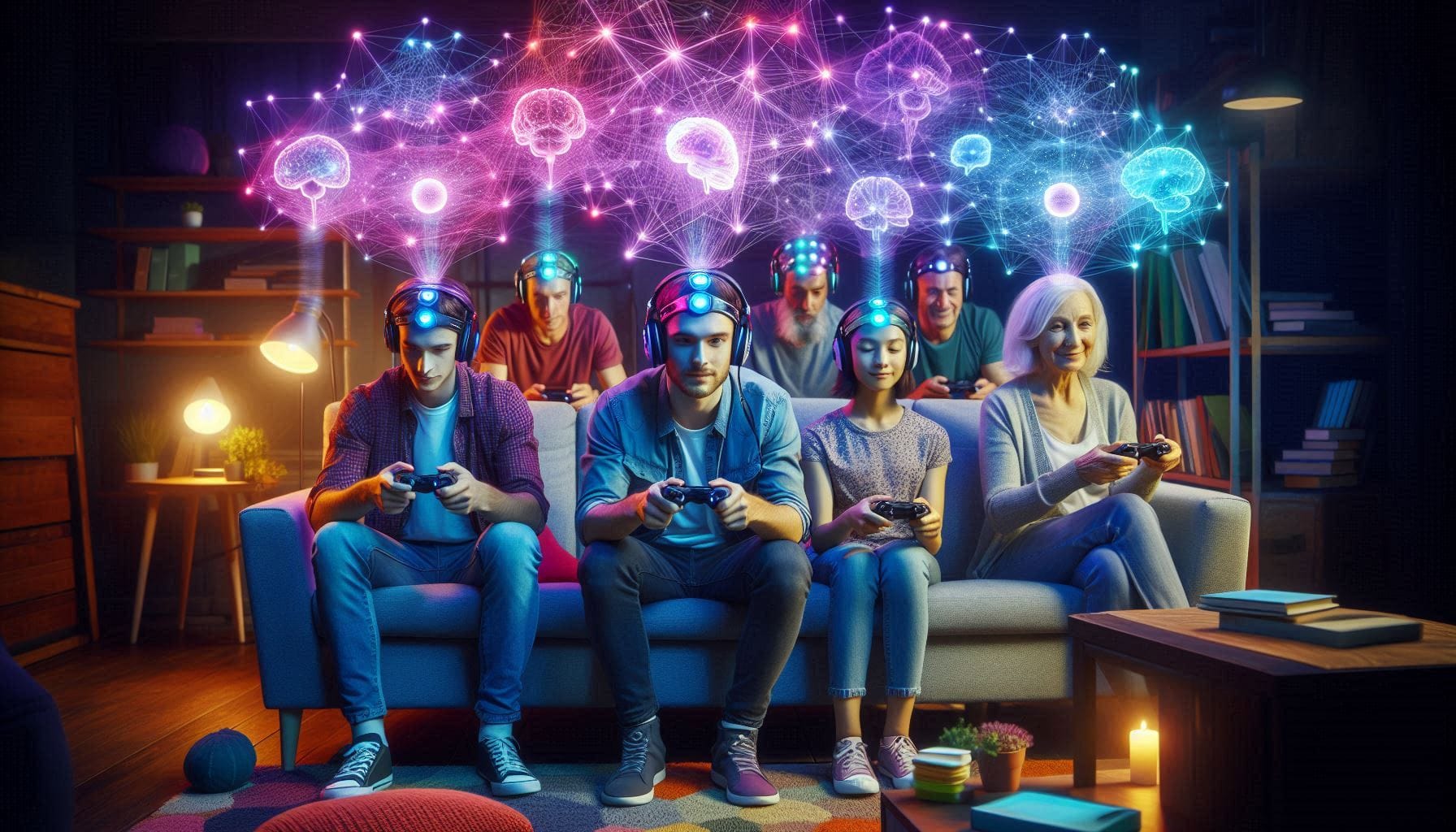
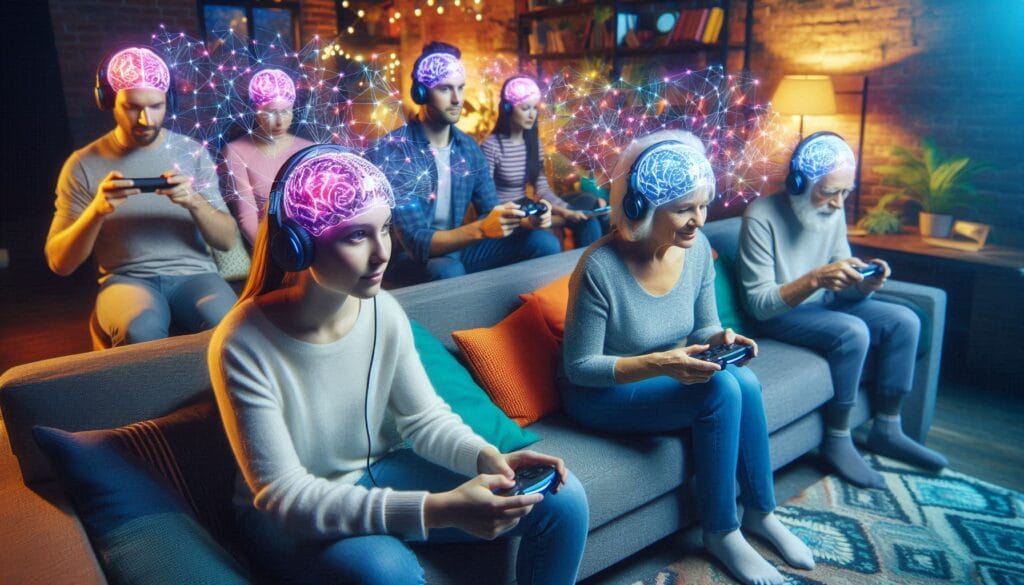
The human brain thrives on challenge, feedback, and novelty—three principles deeply embedded in game mechanics. Neuroimaging studies using fMRI and EEG consistently show that playing video games activates a symphony of brain regions:
- The prefrontal cortex (responsible for executive function and decision-making) lights up during strategy and resource management.
- The hippocampus (critical for spatial memory and navigation) expands in players of 3D exploration games like The Legend of Zelda or Minecraft.
- The dorsal attention network sharpens under the sustained focus demanded by fast-paced shooters or rhythm games.
A landmark 2025 meta-analysis published in Nature Human Behaviour reviewed 127 studies and concluded that moderate gameplay (5–10 hours per week) correlates with improved working memory, processing speed, and cognitive flexibility—especially in adults over 50 and adolescents undergoing neural development.
Crucially, these benefits are dose-dependent and genre-specific. Mindless grinding offers little; but games requiring planning, adaptation, and rapid response yield significant gains.
Genre Matters: Which Games Deliver the Greatest Cognitive Return?
Not all games are created equal when it comes to brain training. Researchers now classify cognitive impact by genre:
1. Action Games (FPS, TPS)
Titles like Call of Duty, Overwatch, or Fortnite enhance visual attention, hand-eye coordination, and multitasking. A 2026 University of Rochester study found that just 10 hours of action gaming improved participants’ ability to track multiple moving objects by 30%—a skill directly transferable to driving or air traffic control.
2. Strategy & Puzzle Games
Civilization VII, Stellaris, or Portal 2 demand long-term planning, resource allocation, and logical deduction. These games strengthen executive function and problem-solving resilience. In classroom trials, students who played strategy games for 30 minutes, three times a week, outperformed peers in standardized math and logic tests by 18%.
3. 3D Exploration & Open-World Games
Games with complex spatial environments—Elden Ring, Red Dead Redemption 2, No Man’s Sky—stimulate the hippocampus, improving spatial navigation and episodic memory. MRI scans from a 2025 McGill University trial showed a 5–7% increase in hippocampal volume after eight weeks of regular play.
4. Rhythm & Music Games
Beat Saber, Rhythm Doctor, or Taiko no Tatsujin enhance temporal processing, motor synchrony, and even language acquisition (due to rhythmic phoneme alignment). These are now being trialed in stroke rehabilitation programs to restore motor timing.
5. Social Simulation & Narrative Games
Titles like Animal Crossing, Stardew Valley, or Life is Strange foster empathy, emotional intelligence, and theory of mind—the ability to infer others’ mental states. fMRI studies show increased activity in the temporoparietal junction, a region linked to social cognition.
Beyond Entertainment: The Rise of Therapeutic and Educational “Serious Games”
In 2026, the line between entertainment and therapy continues to blur. Regulatory bodies like the FDA have already cleared games like EndeavorRx (for ADHD in children) and NeuroRacer (for age-related cognitive decline). These “prescription games” use adaptive algorithms to adjust difficulty in real time, ensuring players stay in the zone of proximal development—challenged but not overwhelmed.
Schools are integrating games like Minecraft: Education Edition to teach coding, chemistry, and collaborative problem-solving. Meanwhile, corporate training programs use VR simulations to develop crisis management and leadership under pressure.
Even mental health apps now incorporate gamified elements: mood-tracking becomes a “quest,” mindfulness exercises turn into “energy restoration,” and habit formation follows RPG-style progression—making self-improvement engaging rather than burdensome.
Caveats and Considerations: It’s Not All Power-Ups
Despite the promise, experts caution against overgeneralization. Excessive gaming—particularly of highly addictive, reward-driven titles—can lead to sleep disruption, anxiety, and attention fragmentation. The key lies in intentionality and balance.
The American Academy of Neurology’s 2026 guidelines recommend:
- Limiting recreational gaming to 1–2 hours per day for adults.
- Prioritizing games with clear goals, meaningful choices, and minimal microtransactions.
- Avoiding late-night play, which disrupts melatonin production and REM sleep.
Moreover, cognitive gains are not automatic—they require active engagement. Watching gameplay on Twitch yields none of the neural benefits of hands-on interaction.
The Future of Neurogaming: AI, Personalization, and Brain-Computer Interfaces
Looking ahead, 2026 marks the dawn of adaptive neurogaming. Powered by AI, next-generation titles will monitor player biometrics (via wearables or built-in sensors) and adjust in real time to optimize cognitive load. Imagine a puzzle game that becomes slightly harder when your focus peaks, or a relaxation game that softens visuals when stress markers rise.
Emerging brain-computer interface (BCI) prototypes—like those from NextMind or Samsung’s NeuroTech Lab—allow games to respond directly to neural signals. Early trials show that BCI-integrated games can accelerate neuroplasticity, helping stroke patients regain motor control 40% faster.
By 2027, we may see “cognitive fitness scores” integrated into gaming platforms—much like step counts in fitness apps—offering personalized recommendations: “Based on your prefrontal activity, try a 20-minute session of tactical role-playing today.”
Conclusion: Play with Purpose
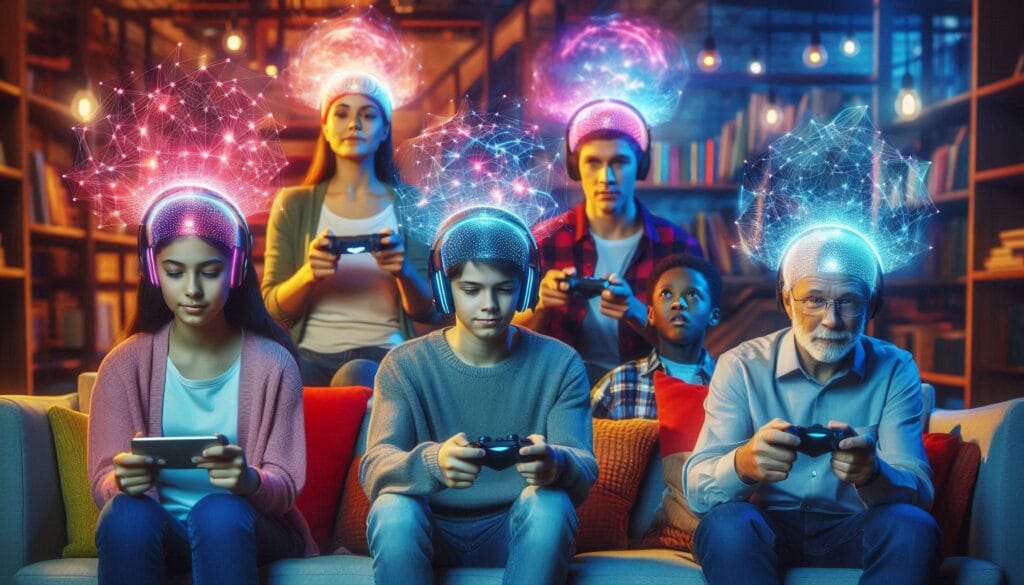
The stigma surrounding video games is fading—not because we’ve lowered our standards, but because science has raised our understanding. In 2026, video games are no longer just entertainment; they are interactive cognitive gyms, tailored to sharpen the mind as effectively as treadmills tone the body.
The key is mindful engagement: choosing the right games, playing in moderation, and aligning gameplay with personal or therapeutic goals. Whether you’re a student preparing for exams, a professional honing decision-making, or a retiree preserving mental agility, there’s likely a game that can help—not by replacing traditional methods, but by making cognitive training engaging, rewarding, and deeply human.
As neuroscience and game design continue to converge, one truth becomes clear: in the right context, pressing start might just be the smartest move you make all day.