
Lastest

The Hidden Blueprint of Brilliance: Inside LEGO’s Secret Museum and the System That Built a Legacy

In the quiet town of Billund, Denmark—best known as the birthplace of one of the world’s most iconic toys—lies a trove of cultural and industrial heritage hidden in plain sight. Tucked beside the modest home of Ole Kirk Kristiansen, the carpenter who founded LEGO in 1932, stands a museum unlike any other. It is not open to the public. Visitors must be employees—or, on exceedingly rare occasions, trusted journalists granted unprecedented access. This is LEGO’s internal museum: a sanctuary of innovation, nostalgia, and meticulous design philosophy.

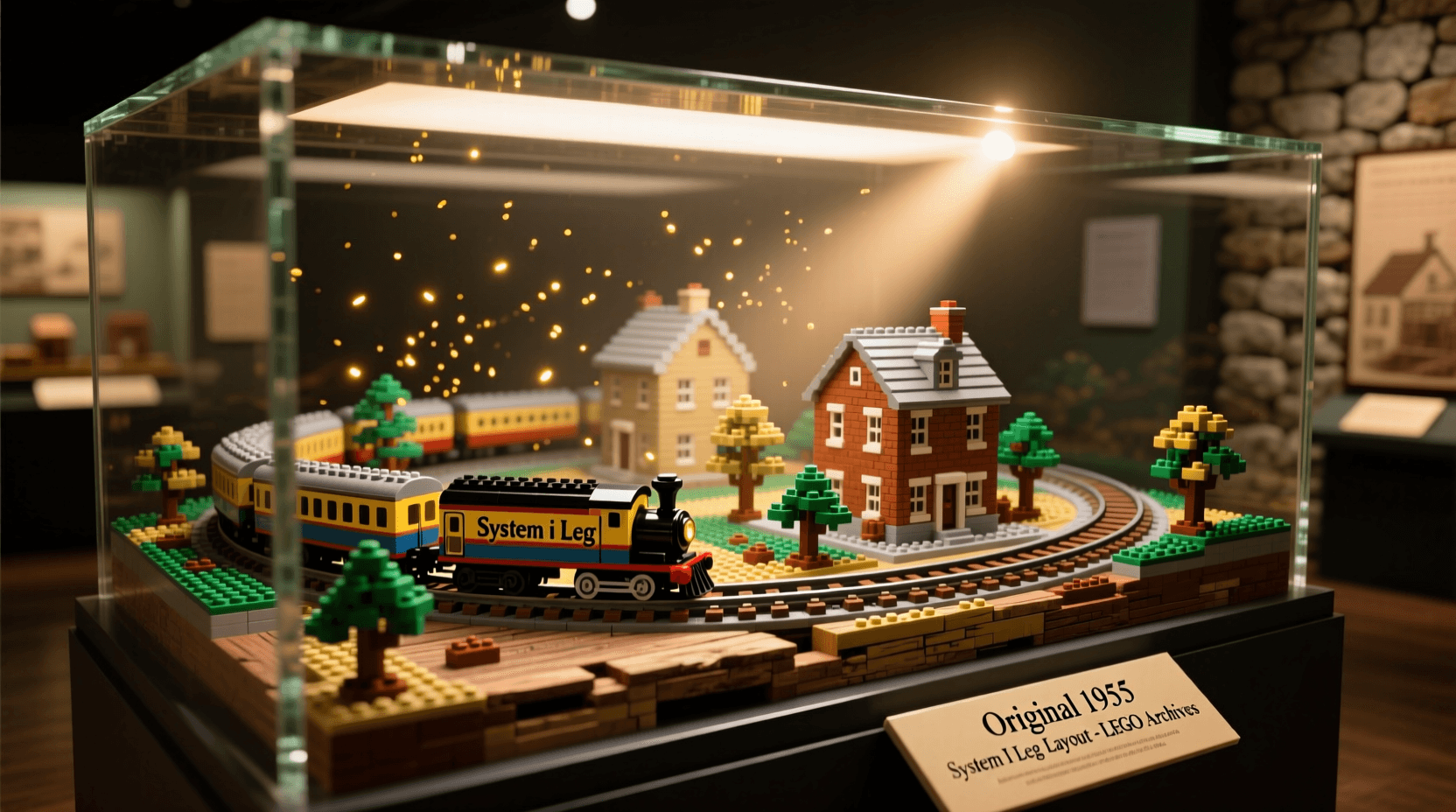
Here, under controlled lighting and climate-stabilized display cases, rest the earliest prototypes of the interlocking bricks that would one day conquer the imaginations of children and adults alike across every continent. Among them is the 1955 “System i Leg” (System in Play)—LEGO’s first coherent town layout, complete with roads, buildings, and trains. It was more than a toy set; it was a declaration of intent. From that moment onward, everything LEGO produced would adhere to a singular, revolutionary principle: universal compatibility. A brick made today fits seamlessly with one molded in 1958—a promise kept without compromise for over six decades.

This article offers an exclusive, in-depth exploration of that secret museum, unpacking how LEGO’s unwavering commitment to a coherent system—not just a product—has fueled its remarkable longevity. We examine the historical milestones, the design ethos, the near-collapse and rebirth of the brand, and the cultural significance of a toy that transcends play to become a medium of creativity, engineering, and even emotional expression. In doing so, we reveal why LEGO isn’t merely surviving in the digital age—it’s thriving.


The Birth of a System, Not Just a Toy

LEGO began not with plastic, but with wood. Ole Kirk Kristiansen, a master carpenter who lost his furniture business during the Great Depression, turned to crafting wooden toys—pull-along ducks, yo-yos, and miniature furniture—emblazoned with the motto “Det bedste er ikke for godt” (“Only the best is good enough”). This ethos would become the company’s north star.

See also  Blue Origin Rockets First Wheelchair User Into Space: Michaela Benthaus Soars Beyond Earth and Expectations

The shift to plastic in the late 1940s was risky. Many dismissed the new material as cheap and transient. But in 1949, LEGO introduced its “Automatic Binding Bricks,” based on a British patent owned by Kiddicraft. These early bricks had limited interlocking capability and no standardized system. It wasn’t until 1958—five years after Ole Kirk’s son, Godtfred, took the reins—that the modern LEGO brick was patented: with its iconic stud-and-tube coupling mechanism. That same year, Godtfred articulated the LEGO System in Play, defining six core principles that would govern all future development: affordability, durability, simplicity, imagination, creativity, and system compatibility.

The 1955 System i Leg exhibit in the secret museum is the physical embodiment of that vision. It includes not just bricks, but trains, signage, and modular buildings—all designed to work together. This was revolutionary. While competitors sold isolated toys, LEGO sold ecosystems. A child could start with a house, then expand to a fire station, then a spaceport—each addition enhancing, not replacing, the last. The system encouraged cumulative creativity, fostering long-term engagement and emotional investment.


The Museum as a Time Capsule of Innovation

The secret museum is not arranged chronologically in the traditional sense. Instead, it is organized thematically: “The Philosophy of Play,” “Engineering the Brick,” “Global Expansion,” “Near-Failure and Reinvention,” and “The Digital Frontier.” Each section reveals a layer of LEGO’s strategic depth.

One display case holds the very first injection-molded bricks—translucent, slightly warped, bearing the faint imperfections of early manufacturing. Beside them sits a 2024 sustainable prototype made from bio-sourced polyethylene, indistinguishable in function but signaling LEGO’s commitment to environmental responsibility. The contrast underscores a key truth: LEGO innovates without betraying its core.

Another section showcases discontinued themes—Galaxy Squad, Alpha Team, Belville—each representing bold, sometimes failed, experiments in storytelling and market diversification. These aren’t hidden in shame; they’re preserved as lessons. The museum honors intelligent failure—the kind that arises from daring to push boundaries.

Perhaps most striking is the “Brick Wall”: a floor-to-ceiling grid displaying every standard LEGO element ever produced, from the humble 2×4 brick to the intricate hinge plates and Technic gears. Visitors are invited to handle samples. The tactile experience—smooth ABS plastic, precise tolerances of 0.002 mm—makes tangible why LEGO bricks feel “right.” This precision isn’t accidental; it’s the result of relentless quality control. LEGO’s bricks are among the most consistently manufactured consumer products in the world, with a defect rate of less than 18 parts per million.


Avoiding Collapse: The System as Lifeline

In the early 2000s, LEGO nearly collapsed. Diversification into video games, clothing, theme parks, and even a LEGO-branded children’s television channel diluted the brand. Internal chaos reigned. Between 1998 and 2004, the company lost over $300 million. Outsiders predicted its demise.

The turnaround, led by CEO Jørgen Vig Knudstorp, began with a return to first principles. Knudstorp famously asked: “What does LEGO do better than anyone else?” The answer: the brick. He halted peripheral ventures, refocused on the System in Play, and empowered designers to innovate within strict guidelines. The result? Hits like LEGO Star Wars (a masterstroke of licensed storytelling that respected the system’s integrity) and LEGO Mindstorms (which merged physical play with programmable robotics).

See also  The Fall of the Expedition: Why Clair Obscur: Expedition 33 Was Stripped of Its Indie Game of the Year Title

Crucially, LEGO reconnected with its adult fanbase—the AFOLs (Adult Fans of LEGO)—through initiatives like LEGO Ideas, where fans submit designs that can become official sets. This democratization of creation, combined with unwavering system fidelity, rebuilt trust and loyalty. By 2015, LEGO had surpassed Mattel to become the world’s largest toy maker by revenue.

The secret museum documents this near-death experience with sober clarity. A digital timeline shows declining sales graph juxtaposed with internal memos pleading for discipline. It’s a cautionary tale embedded in celebration: even giants can fall if they forget their foundation.


The Cultural Phenomenon: More Than Just Bricks

LEGO’s impact extends far beyond children’s bedrooms. Architects use LEGO to model structures. Psychologists employ it in therapy for autism and trauma. Artists like Nathan Sawaya create large-scale sculptures that tour major galleries. The company’s collaboration with NASA, MIT, and even the World Wildlife Fund reveals its role as a platform for education and social good.

The museum dedicates a wing to these applications. One video shows students in rural Kenya using LEGO Education kits to build water filtration models. Another features a veteran explaining how building LEGO sets helped him manage PTSD. These stories illustrate that LEGO’s “System in Play” has evolved into a System of Expression—a universal language of form and function.

Moreover, LEGO’s embrace of inclusivity is evident in recent sets: wheelchair-using minifigures, diverse skin tones, and collaborations with LGBTQ+ artists. The museum displays early minifigures—homogeneous, smiling, gender-neutral—alongside today’s nuanced representations, highlighting a quiet but profound evolution in cultural awareness, all while maintaining the same 1.6 cm-tall scale.

See also  The Best Shooter Games of 2025 According to Metacritic: Where Innovation Meets the Trigger

The Future: Preserving the Past While Building Tomorrow

Today, LEGO faces new challenges: digital competition, sustainability demands, and shifting attention spans. Yet its response remains rooted in the system. LEGO DOTS merges physical creativity with digital customization. LEGO Super Mario blends interactive tech with brick-based play. Even its foray into the metaverse emphasizes tangible-digital synergy, not replacement.

The museum’s final exhibit is a “Future Lab” featuring AI-assisted design tools and recycled-material prototypes. A quote from Godtfred Kristiansen is etched on the wall: “The best play comes from the child’s imagination, not the box.” This philosophy ensures that no matter how advanced the technology, the brick remains the center.

LEGO’s secret museum is more than an archive—it’s a manifesto. It declares that consistency, quality, and respect for the user’s creativity are not outdated values but timeless ones. In an age of disposability and distraction, LEGO offers permanence. Its bricks endure not because they’re indestructible, but because they invite endless reinvention—always within a framework that guarantees wholeness.


Conclusion: The Enduring Power of a Simple System

LEGO’s longevity is not the result of nostalgia alone, nor marketing brilliance, nor even licensing deals with Hollywood giants. It stems from a foundational insight: true play emerges from open-ended systems, not closed products. The secret museum in Billund is the physical testament to that insight—a cathedral of plastic where every artifact whispers the same truth: play well, build together, and never compromise the system.

As generations pass, and as screens dominate more of childhood, LEGO’s greatest act of rebellion may simply be staying analog, tactile, and infinitely combinable. In preserving its past with such fidelity, it secures its future. And perhaps, in a world increasingly fragmented, there is profound hope in a system where every piece—old or new, simple or complex—still fits perfectly together.

Jordan Hayes

Jordan Hayes is a seasoned tech writer and digital culture observer with over a decade of experience covering artificial intelligence, smartphones, VR, and the evolving internet landscape. Known for clear, no-nonsense reviews and insightful explainers, Jordan cuts through the hype to deliver practical, trustworthy guidance for everyday tech users. When not testing the latest gadgets or dissecting software updates, you’ll find them tinkering with open-source tools or arguing that privacy isn’t optional—it’s essential.

Related Articles

Leave a Reply

Your email address will not be published. Required fields are marked *

Back to top button